
Last Updated: November 8, 2026
Quick Summary
The best tips for sourcing construction materials regional in Australia are to build a full procurement checklist, find and verify local suppliers, order early, and compare delivered landed costs rather than list prices. Plan for limited range, longer lead times and higher freight, and confirm every product meets the National Construction Code and relevant Australian Standards before you buy.
- Write a full materials list from approved plans and add a small waste allowance to timber and tile orders.
- Ask regional councils and other builders to surface local suppliers that are not easy to find online.
- Check each supplier's ABN, physical address, stock position and delivery coverage before ordering.
- Request a delivered quote to your exact site address, with freight and unloading itemised separately.
- Keep at least a one-week buffer on critical-path materials and order long-lead items such as windows early.
Table of Contents
- Why Sourcing Construction Materials Is Harder Outside the Major Cities
- Building Materials Procurement Checklist for Regional Projects
- How to Find and Verify Regional Suppliers
- Building Material Lead Times and Seasonal Scheduling
- Calculating Total Landed Cost for Remote Deliveries
- Confirming Building Product Compliance Australia Requires
- Planning Your Next Regional Order With Confidence
- Frequently Asked Questions
Why Sourcing Construction Materials Is Harder Outside the Major Cities
Sourcing building materials away from the big metro hubs takes more planning than many builders expect. Fewer local merchants may stock a full range, and delivery windows can stretch.
The gap usually shows up in three places: limited range, longer lead times, and higher freight costs. Delivery times for bulk loads such as timber can vary considerably between metro and regional locations. Plan for that gap before the project starts, not after.
This guide walks through practical steps to close it. Each section covers one part of the sourcing process, from building a checklist to confirming compliance.
Building Materials Procurement Checklist for Regional Projects
A good procurement checklist stops the most common regional mistakes before they cost money. Work through it before placing any order.
- Write a full materials list from the approved plans and specifications
- Confirm exact sizes, grades and quantities, with a small allowance for waste
- Note which items are hard to source locally and need early ordering
- Check delivery terms: drop-off point, unloading access and any minimum order
- Record a backup supplier for every critical item
- Confirm the delivery date against the project schedule
Watch out: Ordering only the quantity on the plan often leaves a project short. Add a small waste allowance to every timber and tile order.
How to Find and Verify Regional Suppliers
Most guides tell you to 'check your supplier' and stop there. Once you have a shortlist, check the quality of the materials themselves with a seven-step method. In regional areas the harder problem is discovery: the merchant who carries your core range may be a two-hour drive away, may not advertise, and may not appear in the first page of search results. Build a supplier map before you build a quote comparison.
Where regional suppliers actually hide
- Local merchants and trade co-operatives. Many regional towns have a single independent hardware or building supplier that serves a wide catchment. Ring the local council's planning or economic development desk, they usually know which merchants service which postcodes.
- Manufacturers and processors. Timber mills, concrete plants, quarry operators and brickworks often sell direct or through a single distributor. Ask the manufacturer which merchants in your region hold their stock.
- Salvage and second-hand yards. Demolition salvage can supply structural timber, bricks, roofing and fittings at a fraction of new cost, but grading and certification become your responsibility. Only use salvaged structural material where a suitably qualified person has confirmed it meets the relevant standard.
- Trade networks and buying groups. Independent merchants often belong to a buying group that gives them access to a wider catalogue than their yard holds. Ask whether they can order through the group rather than sending you to a distant supplier.
- Other builders and site supervisors. A five-minute call to a builder working 100 km away will usually surface two or three suppliers you would never find online.
Verify each supplier on five fronts
- Registration and trading address. Check the ABN on the Australian Business Register and confirm the business has a physical address in the region it claims to serve, not just a PO box.
- Stock position and replenishment. Ask how much of your core item is on the floor today, how often the store is replenished, and where the stock ships from. A merchant who holds two pallets and replenishes weekly is a different risk to one who drop-ships from a capital city.
- Service coverage and freight terms. Confirm the exact postcode or site address they deliver to, whether delivery is by their own truck or a subcontracted carrier, and who is responsible for unloading.
- Product documentation. Request specifications, test reports and declarations of conformity for the items you intend to buy. A supplier who cannot produce these quickly is a compliance risk, not just a service risk.
- References in similar regions. Ask for a customer in a comparable location and call them. A supplier who performs well in a metro yard may not have the freight relationships for remote delivery.
Watch out: A supplier who quotes ex-works prices and leaves freight to you is not necessarily cheaper, because delivered cost can be considerably higher once remote freight and handling are added. Always ask for a delivered quote to your site address.
Australian Business Register ABN lookup
Once you have verified suppliers for each critical category, move to the landed-cost comparison rather than comparing headline prices.
Building Material Lead Times and Seasonal Scheduling
Lead times change with the season, the weather and freight availability. Build those variables into your programme rather than discovering them mid-job.
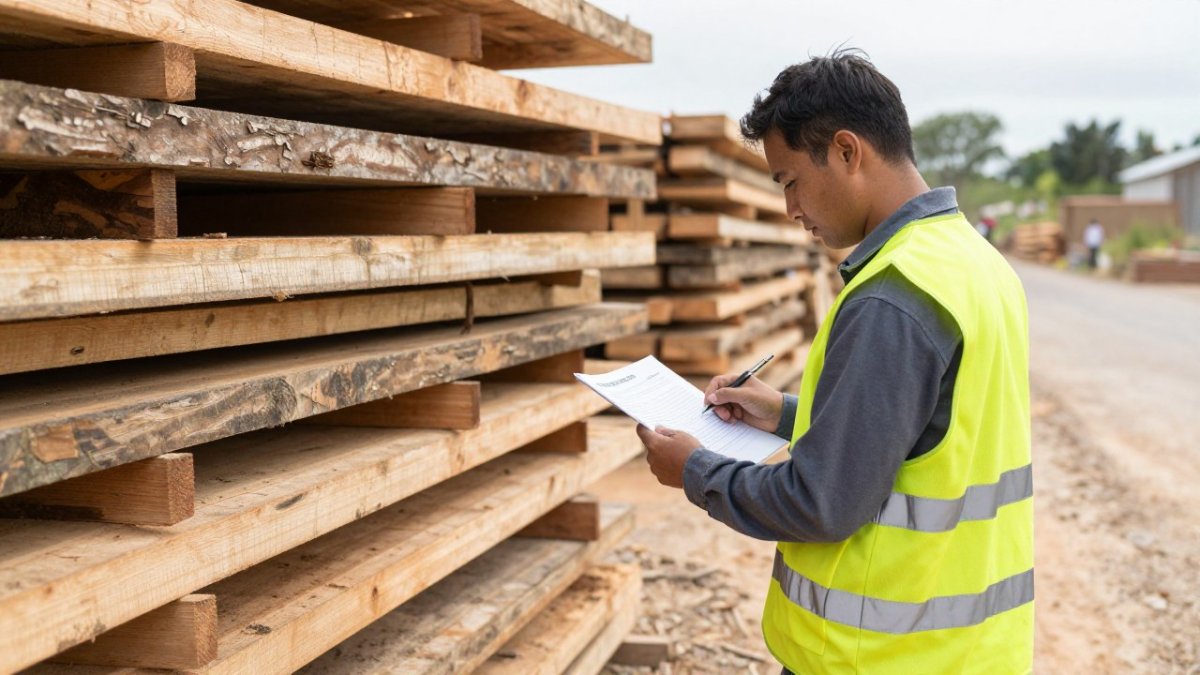
A site supervisor checking a delivery docket beside timber bundles shows why this matters: the docket is only useful if the order was placed far enough ahead.
- Order long-lead items such as windows, doors and custom joinery early
- Expect slower deliveries during wet seasons and public holiday periods
- Keep a buffer of at least one week on critical path materials
- Confirm stock levels before the scheduled pour or install date
The table below summarises the scheduling points that help keep a regional build on programme.
| Item | Guidance | Note |
|---|---|---|
| Long-lead items | Order early | Windows, doors and custom joinery |
| Wet seasons | Expect slower deliveries | Also public holiday periods |
| Critical path materials | Keep a buffer | At least one week |
| Scheduled pour or install | Confirm stock levels | Check before the date |
Calculating Total Landed Cost for Remote Deliveries
The unit price on a quote is not what you pay. For a regional project, the delivered cost can be materially higher than the metro price once freight, handling, minimum-order penalties and breakage are included. Build the calculation line by line so you can compare a local merchant and a distant supplier on the same basis.
The landed-cost formula
Landed cost = (unit price × quantity) + freight + handling and unloading + remote-area surcharge + minimum-order shortfall + expected breakage and waste + storage and double-handling + delay cost.
Work through each line:
- Freight. Regional freight is usually priced by weight or cubic metre, with a minimum charge per consignment. A single pallet to a remote site can cost more than the material on it. Ask for the freight rate per pallet and per tonne, and whether rates change for tail-lift or crane unloading. For heavy items, see delivery costs for bulk timber orders.
- Handling and unloading. If the site has no forklift or the truck cannot access the block, you pay for a tail-lift, a crane truck or a second person. Confirm access before you order, a failed delivery is charged twice.
- Remote-area surcharge. Some carriers apply a surcharge beyond a defined radius or for unsealed-road delivery. Ask the supplier to state the surcharge in writing.
- Minimum-order shortfall. A merchant with a minimum order value may charge the difference if your order falls short. Consolidating orders across trades is often cheaper than paying the shortfall twice.
- Breakage and waste. Add a realistic waste allowance for timber and tiles, and assume some breakage on long-haul deliveries. Photograph and document any damage on arrival.
- Storage and double-handling. If material arrives before the site is ready, you pay to store and move it again. Time deliveries to the programme, not to the supplier's convenience.
- Delay cost. A late delivery that idles a trade crew for a day is a real cost. Build a one-week buffer on critical-path materials and price the risk of a missed window. For practical habits that protect the programme, read logistics habits that keep renovations on schedule.
Worked comparison
Suppose a local merchant quotes a higher unit price but delivers quickly with no surcharge, while a distant supplier quotes a lower unit price but adds freight, a remote surcharge and a longer lead time. On paper the distant supplier may look cheaper. Once freight, handling and the delay risk are added, the local merchant can be the lower landed cost, and often the lower risk. Run the numbers for every critical item rather than assuming either option wins.
Watch out: Comparing list prices across suppliers is the most common regional procurement error. Always ask for a delivered quote to the exact site address, with freight, surcharge and unloading itemised separately, so you can see what you are actually paying for.
National Construction Code and Australian Standards guidance
Once you have a landed cost for each critical item, use it to decide which materials to source locally, which to consolidate into a single remote delivery, and which to stage across the programme, applying these tips for sourcing construction materials in regional Australia.
Confirming Building Product Compliance Australia Requires
Materials must meet the standards that apply to your project. For most work in Australia, that means checking products against the National Construction Code and the relevant Australian Standards.
Look for evidence on the product or in its documentation, such as a certification mark, a test report, or a declaration of conformity. Keep these records with your project file, as building surveyors and inspectors may ask to see them.
If you are unsure which standard applies, check the official guidance from the Australian Building Codes Board before you buy.
Planning Your Next Regional Order With Confidence
Put the steps together before your next order. Start with a complete materials list, verify two suppliers, calculate landed cost, and confirm compliance. Then build the lead times into your schedule.
Regional sourcing rewards planning. The builders who order early, check delivered prices and keep a backup supplier rarely face the costly delays that catch others out.
Ready to source your next project with confidence? Explore Trade Warehouse Direct's range of building and renovation supplies, with standard delivery across Australia.
Frequently Asked Questions
How do you find reliable building material suppliers for regional projects?
Start with suppliers that show a physical address, a verifiable ABN and clear trading terms. Ask for stock confirmation in writing before committing, and request references from other tradespeople in your area. Compare at least two local suppliers with one online supplier, looking at lead times, minimum order quantities and whether they will deliver to your postcode. Pricing depends on quantity, dates and delivery, so request a quote for your specific order rather than relying on list prices.
How can you reduce construction material delivery costs in remote areas?
Consolidate orders so that one delivery covers several materials, which spreads the freight charge. Schedule deliveries to match your build sequence so materials do not sit on site or require a second trip. Ask whether the supplier has a warehouse nearer your site, and check free shipping thresholds before you add items to a cart. Always compare the delivered price, not the unit price, when weighing suppliers.
What should you check before ordering building materials?
Confirm the exact specification, grade and quantity against your plans, including allowance for waste. Check stock availability and the expected dispatch date, and confirm who will unload the goods and whether the delivery vehicle can access your site. Review the supplier's returns policy for non-standard items. A short checklist completed before you place the order prevents most costly substitutions and delays.
What documents should you request to verify building product compliance?
Ask for the product's certification or test report, its declaration of conformity and any reference to the relevant Australian Standard, such as the AS/NZS series that applies to the product. For structural and safety-critical items, check that the product is referenced in the National Construction Code and that the supplier can provide traceability information. Keep these documents with your project records, as building certifiers and inspectors may request them.

