

Table of Contents
- Why Building Material Quality Checks Save Money and Headaches
- Your Building Materials Quality Checklist for Delivery Day
- How to Check Cement Quality Before It Goes in the Mix
- Construction Material Testing Methods You Can Run On Site
- Building Materials Certificates and Test Reports: What to Request
- Common Mistakes That Let Poor-Quality Materials Through
- When to Reject a Delivery and How to Handle It
- Frequently Asked Questions
Last Updated: October 21, 2026
Why Building Material Quality Checks Save Money and Headaches
A failed slab, a wall that cracks within a year, or fixings that rust after the first wet season all trace back to the same thing: nobody checked the materials before they went in. Learning how to verify building material quality is the cheapest insurance a project has.
At Trade Warehouse Direct, we supply fixings, fittings and building supplies to sole traders, contractors and DIY renovators. Replacing failed materials costs far more than the materials themselves. You pay twice for the product, plus labour, delays and rework.
Building material quality is the measure of whether a product meets the standard it claims and suits the job it's bought for. It covers strength, durability, dimensions and compliance with Australian standards. A brick that looks fine can still fail a simple field test.
The good news: most problems are catchable before the truck leaves your site. Below, we break down the checks that matter, from the delivery docket to the field tests you can run with basic gear.
Your Building Materials Quality Checklist for Delivery Day
A building materials quality checklist is a short list of checks you run on every delivery, every time. It takes minutes and catches most issues before they become your problem.
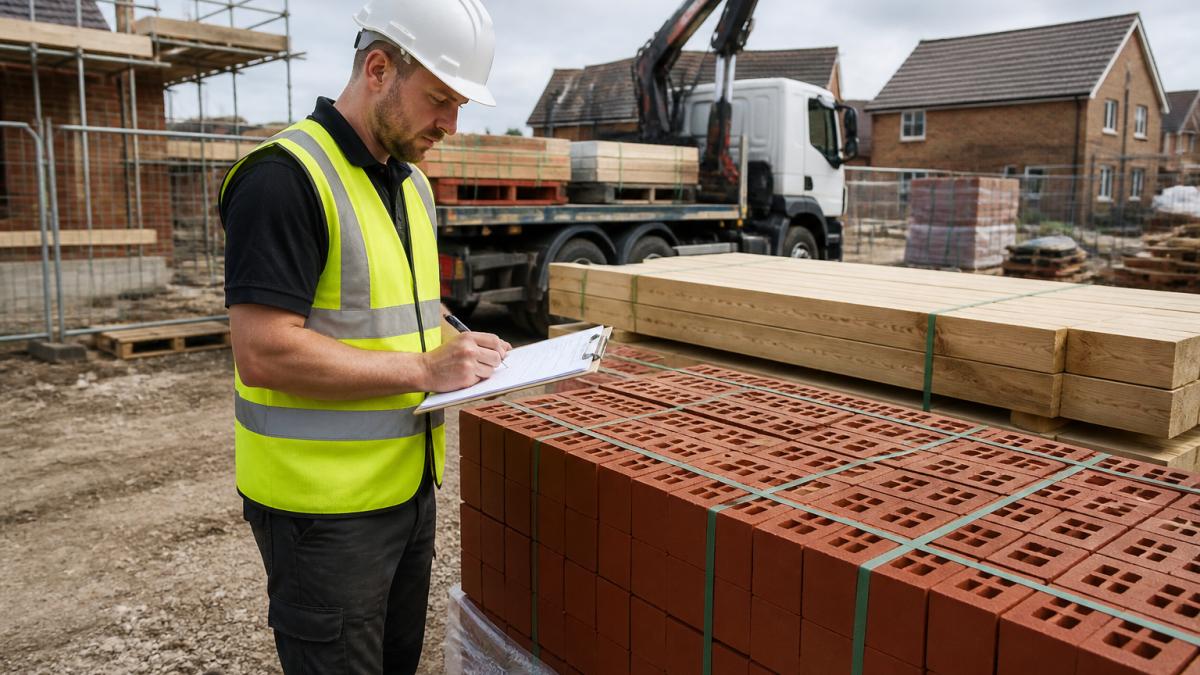
What to Inspect Before You Sign for a Delivery
Signing the docket is you accepting the goods. Once you sign, the supplier can argue the damage happened on your site. So inspect first.
Run through these checks before the driver leaves:
- Match the delivery to your order: product, grade, quantity and dimensions
- Check packaging for tears, water damage or crushing
- Look for cracks, chips, warping or rust on a sample from each pallet
- Confirm batch or production codes on cement, grout and pre-mixed products
- Photograph any damage before you sign, with the docket in frame
- Note any issues on the docket itself and get the driver to initial it
Storage and Handling Checks After Acceptance
Acceptance isn't the end of the job. Poor storage ruins good materials.
Cement absorbs moisture and goes lumpy. Timber warps if it's stacked flat on wet ground. Steel fixings start to corrode in damp conditions. Keep materials off the ground, covered and ventilated, and rotate stock so older batches get used first.
How to Check Cement Quality Before It Goes in the Mix
Cement is the one material where a bad batch can wreck an entire pour. Knowing how to check cement quality before mixing saves you from a slab that never cures properly.
Start with the bag. Check the batch date, the standard it claims to meet and whether the bag is intact. Old cement loses strength even in a sealed bag, so use fresh stock.
Then run a quick physical check:
- Lumps: squeeze a handful. Fresh cement should flow freely with no hard lumps.
- Colour: it should be a consistent grey. Patches of discolouration can signal moisture exposure.
- Feel: it should feel smooth and cool, not damp or gritty.
If the cement fails any of these, don't use it for structural work. A small test cube poured and left to set will tell you more, but the bag check catches most problems first.
Construction Material Testing Methods You Can Run On Site
You don't need a lab to run basic construction material testing methods. A few simple field tests catch the worst offenders before they're built in.
Simple Field Tests for Bricks, Sand and Aggregate
These checks use gear you already have on site:
| Material | Field Test | What a Pass Looks Like | What a Fail Looks Like |
|---|---|---|---|
| Bricks | Tap two together | Clear ring, no crumbs | Dull thud, chipping |
| Bricks | Drop test from waist height | Holds shape | Shatters or cracks |
| Sand | Squeeze in hand | Falls apart cleanly | Holds a wet ball |
| Aggregate | Visual sort | Consistent size, clean | Excess dust, clay or debris |
| Cement | Squeeze test | Free-flowing, no lumps | Hard lumps, damp feel |
For sand, a quick squeeze tells you if it's too wet or has too much clay. For aggregate, spread a handful and look for dirt, roots or oversized stones. For bricks, a sharp tap and a controlled drop reveal more than a visual check ever will.
These tests aren't a substitute for certified lab testing on structural work. They're a fast filter that stops obvious duds from reaching the mixer.
Building Materials Certificates and Test Reports: What to Request
Building materials certificates and test reports are the paper trail that proves a product meets the standard it claims. Ask for them before you order, not after something fails.
Request these documents from any supplier:
- A certificate of conformity or compliance for the product
- Batch-specific test reports where the product is structural
- A current safety data sheet for chemicals, adhesives and sealants
- Evidence the product meets the relevant Australian standard
The National Construction Code sets the baseline for building products, and the Australian Building Codes Board publishes guidance on proving compliance. For products tied to health and safety, the ACCC enforces mandatory safety standards and recalls.
If a supplier can't produce the paperwork, treat that as a red flag. Legitimate suppliers keep these documents on file and hand them over without fuss.
Common Mistakes That Let Poor-Quality Materials Through
Most bad materials get through because of process, not bad luck. Here are the mistakes we see most often.
Signing without inspecting. The single biggest cause of disputes. Once you sign, you own the problem.
Trusting a brand name alone. A known brand can still ship a damaged or out-of-date batch.
Skipping batch checks. Mixing cement from different batches without noting it can cause inconsistent strength.
Storing poorly after delivery. Good materials ruined by damp, sun or bad stacking.
Not keeping records. No photos, no docket notes, no test reports means no comeback.
A common mistake is buying purely on price and never asking for compliance documents. The cheapest pallet is expensive if it fails inspection or gets rejected on site.
When to Reject a Delivery and How to Handle It
Reject the whole delivery if the goods don't match your order, show obvious damage, or come without the compliance documents you requested. Partial rejection works for mixed loads: take the good pallets, send back the bad.
Here's how to handle it cleanly:
- Don't sign the docket as clean. Write the issue on it and photograph everything.
- Tell the driver before they leave. Get their name and the time noted.
- Contact the supplier the same day in writing, with photos attached.
- Keep the rejected goods quarantined and clearly marked so nobody uses them by mistake.
- Confirm replacement or credit in writing before you reorder.
For safety-critical items like structural fixings, electrical components or fire-rated products, err on the side of rejection. A corroded fixing or a non-compliant fire product isn't worth the risk.
That's where a supplier's own quality process matters. At Trade Warehouse Direct, we stock trade-quality supplies with nationwide delivery and a Price Match Guarantee. Free standard shipping applies on orders over $150.
Material failures rarely announce themselves. They show up months later as cracks, corrosion or a failed inspection, long after the truck has gone. The fix is a habit: inspect before you sign, run the field tests, keep the paperwork and store materials properly.
Trade Warehouse Direct makes that habit easier with trade-quality supplies, warehouses in VIC and WA, and nationwide delivery to keep your project moving. Get started with Trade Warehouse Direct and source materials you can verify with confidence. Shop now.
Frequently Asked Questions
How can you check the quality of building materials?
Start with a visual inspection on delivery: look for cracks, chips, warping, damp packaging and corrosion on fixings. Check that the brand, grade and batch numbers match your order and the certificates supplied. Then run simple field tests where relevant, such as a rub test on cement or a ring test on bricks. Keep a building materials quality checklist on hand so every delivery is checked the same way, and photograph anything that looks wrong before you sign.
What documents should you request when buying building materials?
Ask for the supplier's tax invoice, the manufacturer's certificate of conformity or compliance, and test reports for structural or safety-critical items such as fixings, structural timber and fire-rated products. For imported goods, request the batch or lot number so the certificate can be traced to what you received. Keep these documents filed with your project records; they matter if a defect appears later or a certifier or builder asks for evidence of conformity.
How do you check whether cement is good quality?
Check the bag first: it should be undamaged, clearly labelled with the cement type and batch number, and free of hard lumps. Squeeze a handful; good cement should flow freely and feel cool rather than gritty. A simple field test is to drop a small amount into a glass of water; quality cement should sink and settle rather than float. Also confirm the bag date, since cement loses strength over time, and store it off the ground in a dry area.
Can building materials be tested on site?
Yes, several checks can be done on site without a lab: visual inspection, dimension checks, the cement rub and water tests, brick ring tests, moisture checks on timber, and a basic slump test for concrete. These field tests flag obvious problems but do not replace laboratory testing for structural or safety-critical materials. For anything load-bearing or fire-rated, rely on the manufacturer's test reports and, where required, an accredited testing laboratory.
