
Last Updated: 6 November 2026
Quick Summary
The myhomemart vs home hardware choice comes down to buying model: MyHomeMart is an online-first building supplies retailer suited to planned bulk orders, while Home Hardware is a network of independently owned stores with stock that varies by location. Neither is automatically cheaper, so compare the delivered cost per unit before you order.
- Compare the delivered cost per unit, including freight and GST, not the shelf price.
- Send one master list with product codes, sizes and quantities to each supplier.
- Confirm delivery to your postcode before ordering, as freight can decide regional jobs.
- Ask each supplier about trade account terms, minimum orders and consolidated invoicing.
- Many trade businesses use both an online-first supplier and a local store.
Table of Contents
- How MyHomeMart and Home Hardware Differ at a Glance
- Building Supplies Price Comparison: Where Each One Sits
- Range and Stock: Which Online Building Materials Suppliers Cover More
- How to Compare Building Supply Quotes Before You Commit
- Delivery, Freight and Regional Access
- Trade Accounts, Bulk Pricing and Support for Small Contractors
- A Building Materials Checklist for Your First Order
- Choosing the Right Supplier for Your Next Project
- Frequently Asked Questions
How MyHomeMart and Home Hardware Differ at a Glance
The myhomemart vs home hardware comparison comes down to a simple split: MyHomeMart is an online-first building supplies store built for project buyers, while Home Hardware is a national network of independent hardware stores with a strong local presence. At Trade Warehouse Direct, we watch both closely because they compete for the same trade and DIY spend we do. That split shows why comparing hardware suppliers also means weighing specialist ironmongery choices against the broader needs of a build.
MyHomeMart is an online building materials retailer. Home Hardware is a network of independently owned hardware stores, so its range and stock vary by location.
The practical difference matters most when you order in volume. An online-first supplier prices and stocks centrally, which suits planned project buying. A store network suits the urgent Saturday-morning trip when you need one fitting to finish a job.
Neither is automatically cheaper. Which one fits your build depends on what you're buying, how much, and how fast you need it.
Australian Competition and Consumer Commission guidance on comparing prices and unit pricing
Building Supplies Price Comparison: Where Each One Sits
A building supplies price comparison is rarely like-for-like, because the two businesses price differently. Pricing for each supplier varies, so compare the same product across each supplier before you order.
That structure creates a trap. A headline price from one store tells you nothing about what the next store charges, and online prices often exclude freight until checkout.
Our advice: compare the delivered cost per unit, not the shelf price. Add freight, add GST, and add the cost of your time if you have to drive to collect.
| Comparison point | MyHomeMart | Home Hardware |
|---|---|---|
| Pricing model | Central online pricing | Set by each independent store |
| Best for | Planned bulk orders | Urgent single-item pickups |
| Freight | Calculated at checkout | Collection or local delivery |
| Price visibility | Listed online per item | Varies by store |
Pricing at Trade Warehouse Direct depends on quantity, product and delivery location. Visit our website for current prices or request a quote on your list, then compare the delivered total.
Range and Stock: Which Online Building Materials Suppliers Cover More
Online building materials suppliers can offer a broad range, and the right choice depends on the products you need.
Local stores can be useful when you need a specific item quickly, but stock varies by store.
Before committing, check the following:
- Whether the item is actually in stock, not just listed
- Whether the listed size or pack quantity matches your spec
- Whether the supplier can hold stock for a scheduled project
For readers mapping out the wider trade supply landscape, our guide to wholesale plumbing fittings suppliers and our breakdown of where to buy bulk electrical supplies for solar installers show how range varies across categories.
How to Compare Building Supply Quotes Before You Commit
To compare building supply quotes properly, request the same specification from each supplier and compare the delivered total, not the line price. Most quotes go wrong because buyers compare different products, different quantities or different freight terms.
Run this process every time:
- Write one master list with product codes, sizes and quantities
- Send the identical list to each supplier
- Ask each to confirm stock availability and lead time
- Request the delivered total including GST and freight
- Check pack quantities, because a "box of 1000" and a "box of 500" are not the same price
- Confirm the returns position on surplus stock
Watch out: a quote that looks cheapest per unit often loses on freight to a regional site or on a substitution to a lower-grade product. Confirm the grade in writing before you accept.
For a worked example of how these head-to-head comparisons play out between two other suppliers, see our piece on whether tradebuilderssupplies.com.au or directbuildingtradecentre.com.au is the better fit.
Delivery, Freight and Regional Access
Delivery is where online and store-network models diverge most. Freight and collection options differ between suppliers, so check the terms with each one.
For regional buyers, freight cost can be a deciding factor, so confirm delivery to your postcode before ordering.
Trade Warehouse Direct runs warehouses in Victoria and Western Australia, offers free standard shipping on orders over $150, and delivers nationwide.
Ask any supplier two questions before ordering: what is the freight cost to my postcode, and what is the realistic lead time, not the advertised one.
Trade Accounts, Bulk Pricing and Support for Small Contractors
Small contractors get the most value from a supplier that treats repeat buying as a relationship, not a transaction. Trade account terms vary between suppliers, so ask each one what they offer.
The questions worth asking:
- Is there a minimum order for trade pricing?
- Can you hold a quote while the client approves?
- Who do you call when an order arrives short or wrong?
- Can you consolidate multiple site deliveries onto one account?
For maintenance contractors ordering regularly, ask each supplier whether it offers a single account with consolidated invoicing before you commit.
A Building Materials Checklist for Your First Order
A building materials checklist keeps your first order accurate and your second order cheaper. Most first orders go wrong on quantity and specification, not on price.
Use this as a starting template, adjusted to your project:
- Fixings: screws, anchors, bolts, in the correct drive and coating for the substrate
- Sealants and adhesives: correct type for interior, exterior or wet areas
- Plumbing: fittings, washers, tape and pipe in matching sizes
- Electrical: cable, conduit, boxes and fittings to the required rating
- Safety items: PPE, dust sheets, edge protection
- Consumables: blades, drill bits, gloves, rubbish bags
- Surplus allowance: add a small buffer on high-use consumables
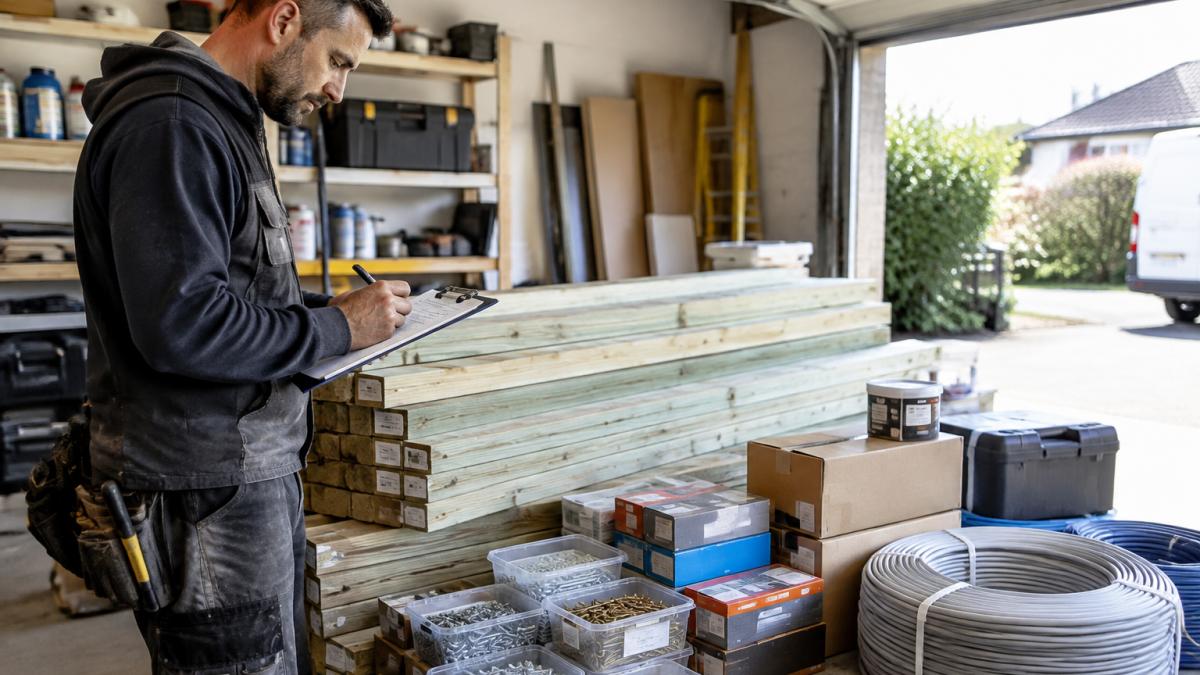
A concrete example of a bulk line worth adding to a first order is a box of pancake head self drilling screws, which covers most light metal-to-metal fixing work.
Choosing the Right Supplier for Your Next Project
Choosing the right supplier comes down to matching the model to the job. Planned bulk buying suits an online-first supplier. Urgent single items suit a local store. Many trade businesses use both.
At Trade Warehouse Direct, we offer a broad catalogue of trade and DIY supplies, a Price Match Guarantee, warehouses in Victoria and Western Australia, and free standard shipping over $150. If you are fitting out a bathroom or a heated floor, a product like our in screed floor heating mat kit shows the kind of project-ready stock we carry.
The myhomemart vs home hardware choice is not really a contest. It is a question of which buying model fits how you work.
Frequently Asked Questions
What is the main difference between MyHomeMart and Home Hardware?
MyHomeMart is an online retailer. Home Hardware is a network of independently owned stores, so stock, service and pricing can vary by location. In practice, the choice comes down to whether you want to order online or visit a local store.
Which has the wider range of building and home improvement supplies?
Ranges differ between suppliers, so if your project needs large quantities of fixings, structural materials or trade-grade components, check stock levels and lead times with each supplier before you rely on them for a full order.
How do MyHomeMart and Home Hardware compare on prices?
Promotions and pricing can vary between suppliers and between stores. A fair building supplies price comparison means checking the same product code, quantity and delivery cost side by side, then factoring in freight, since a lower shelf price can be wiped out by delivery charges on bulky items.
What should I check before ordering building materials online?
Confirm the product code and dimensions, check whether the price includes GST and delivery, and ask about lead times for your postcode. Run through a building materials checklist: quantities with a small wastage allowance, compatible fixings, and whether anything is safety-critical or needs to meet an Australian Standard. Keep the quote in writing so you can compare it against other online building materials suppliers before you commit.
Your next project deserves a supplier that quotes straight and delivers on time. Get started with Trade Warehouse Direct and order your full materials list from one place, backed by our Price Match Guarantee and nationwide delivery.


