
Table of Contents
- What Makes a Fixing Safety-Critical
- Understanding Safety-Critical Fixing Load Capacity
- Anchor Fixing Installation Requirements for Your Project
- Why Fixing Product Technical Data Sheets Matter
- Safety-Critical Fixing Inspection and Maintenance After Purchase
- How to Buy Safety-Critical Fixings Online with Confidence
- Common Mistakes When Ordering Fixings Online
- Frequently Asked Questions
Last Updated: October 19, 2026
What Makes a Fixing Safety-Critical
A safety-critical fixing is any fastener that, if it fails, could cause injury, death, or significant property damage. These aren't optional upgrades or nice-to-have reinforcements. They're the difference between a structure that holds and one that collapses.
Safety-critical fixings appear in anchor points, load-bearing connections, fall protection systems, and electrical installations. A bolt securing a handrail, a screw anchoring a safety rail, a fastener holding a fire escape, these are safety-critical. So are the fixings that hold solar panel arrays, electrical cabinets, and structural beams in place.
The distinction matters because safety-critical fixings are subject to stricter standards and require documented proof of compliance. When you're buying safety-critical fixings online, you're not just purchasing a product. You're purchasing assurance that the fixing meets specific performance criteria and has been tested to confirm it won't fail under the loads and conditions you're applying it to.
Understanding Safety-Critical Fixing Load Capacity
Load capacity is the maximum force a fixing can safely bear before failing. It's measured in kilograms or newtons and varies dramatically depending on the fixing type, the material it's anchored into, and how it's installed.
A standard wall plug and screw might safely hold 20 kilograms in plasterboard. The same screw in solid concrete could hold 200 kilograms. The difference isn't the screw, it's the anchor medium and how the fixing transfers load into it.
For safety-critical applications, load capacity isn't a suggestion. It's a hard limit. Exceeding it voids the fixing's safety certification and creates liability. This is where the product technical data sheet becomes essential. Every reputable manufacturer publishes load ratings for different substrates: masonry, timber, steel, plasterboard, and composite materials.
When you're buying safety-critical fixings online, the load capacity information must be clearly stated. If a supplier can't provide it, that's a red flag.
Anchor Fixing Installation Requirements for Your Project
Installation is where most safety-critical fixing failures occur. The fixing itself might be certified and properly rated, but incorrect installation can reduce its effective load capacity by 50% or more.
Anchor fixing installation requirements vary by substrate. Concrete requires different drilling depth and hole diameter than timber. Plasterboard requires different spacing and pre-drilling than masonry. Steel requires yet another approach entirely.
The product technical data sheet specifies installation requirements for each substrate. It will tell you the exact hole diameter, drilling depth, spacing requirements, and torque specifications (if applicable). These aren't guidelines. They're the conditions under which the fixing's load rating applies.
A common mistake is assuming that if a fixing works in one substrate, it will work the same way in another. It won't. A masonry anchor installed in plasterboard using the masonry installation method will fail catastrophically. The substrate changes the physics of how the fixing transfers load.
Before buying safety-critical fixings online, verify that your substrate matches the fixing's rated applications. If you're installing in an unusual substrate or a mixed-material assembly, consult the manufacturer's technical support or a structural engineer.
Why Fixing Product Technical Data Sheets Matter
The product technical data sheet is the document that proves a fixing meets safety standards and specifies how to use it correctly. It's not marketing material. It's engineering documentation.
A proper technical data sheet includes load ratings for different substrates, installation requirements, material specifications, certifications held, and performance test results. It tells you what the fixing is made of, how it was tested, and what it can safely do.
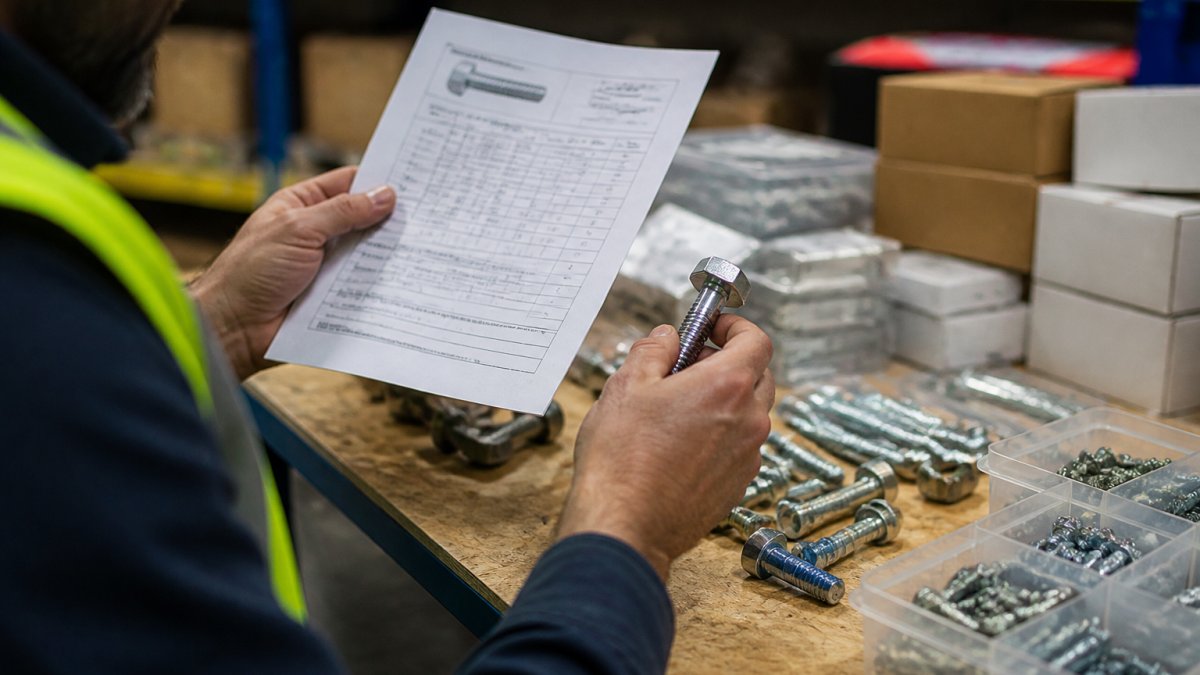
Without the technical data sheet, you're buying blind. You don't know if the fixing is certified for your application. You don't know the correct installation method. You don't know the load capacity. You're assuming the supplier has done the engineering work for you, and that assumption can be expensive.
When buying safety-critical fixings online, always request the technical data sheet before purchase. A supplier that can't provide it isn't selling a certified product. They're selling a fastener and hoping it works.
Safety-Critical Fixing Inspection and Maintenance After Purchase
Inspection begins when the fixings arrive. Check the packaging for damage. Verify that the product matches the order, same type, size, and quantity. Inspect individual fixings for obvious defects: cracks, corrosion, bent threads, or manufacturing flaws.
For fixings stored on-site before installation, environmental conditions matter. Moisture causes corrosion. Temperature extremes can affect material properties. Store fixings in dry conditions, ideally in their original packaging. Check them again before installation.
After installation, periodic inspection catches problems early. Look for signs of corrosion, loosening (for bolted connections), or movement. Vibration, temperature cycling, and load changes can gradually loosen fixings over time. A simple visual inspection every 6 to 12 months catches most issues before they become failures.
The maintenance schedule depends on the application and environmental conditions. Exterior fixings in coastal areas corrode faster than interior fixings. Fixings in high-vibration environments loosen faster than fixings in static loads. Your project's specific conditions determine the inspection frequency.
How to Buy Safety-Critical Fixings Online with Confidence
Start with a clear understanding of your application. What's the substrate? What's the load? What environmental conditions will the fixing face (moisture, temperature extremes, vibration, corrosive atmosphere)? What safety standards apply?
Next, match fixings to your application using the product technical data sheet. Verify that the fixing is certified for your substrate and that its load rating exceeds your actual load by a safe margin. If you're unsure, ask the supplier's technical team before ordering.
When buying safety-critical fixings online, choose a supplier that provides complete technical documentation and can answer application questions. Price matters, but it's secondary to certainty. A cheap fixing that fails is infinitely more expensive than a properly specified fixing at a higher price.
Verify the supplier's stock position before ordering. Delays in receiving fixings can derail projects.
Review the supplier's return and quality guarantee. If fixings arrive damaged or don't meet specifications, you need a straightforward process to resolve it. Reputable suppliers stand behind their products.
Common Mistakes When Ordering Fixings Online
Assuming all suppliers stock the same products is a mistake. Two suppliers might both sell "M10 anchor bolts," but one might stock stainless steel (suitable for wet environments) and the other mild steel (which rusts). The specifications must match your application, not just the size.
Ordering the minimum quantity without considering future maintenance is another common error. Fixings fail. Inspections reveal corrosion or loosening. You'll need replacements. Ordering a few extra units during your initial purchase is cheaper than emergency orders later.
Neglecting to confirm delivery timeframes before ordering causes project delays. "In stock" doesn't mean it dispatches today. Confirm the supplier's dispatch schedule and delivery times to your location, especially if you're in regional areas.
Failing to verify that fixings arrive in good condition is a serious oversight. Inspect every delivery immediately. Photograph any damage. Report issues to the supplier right away while the claim window is open. Damaged fixings should never be installed in safety-critical applications.
Not keeping documentation is a liability issue. Keep purchase receipts, product technical data sheets, installation records, and inspection logs. If something goes wrong, this documentation proves you specified and installed the fixings correctly. It's your protection and the building owner's assurance.
Buying safety-critical fixings online requires more care than buying general hardware, but the process is straightforward once you understand what matters: correct specification, proper installation, and documented maintenance. At Trade Warehouse Direct, we simplify that process by providing nationwide delivery. When you're ready to order safety-critical fixings with confidence, we're here to help. Shop now and get the fixings your project needs, backed by our price match guarantee.
Frequently Asked Questions
What makes a fixing safety-critical?
A fixing becomes safety-critical when its failure could cause injury, property damage, or loss of life. This includes fixings that hold handrails, support electrical equipment, secure scaffolding, or anchor loads overhead. The context of use determines criticality, a fixing that's routine in one application may be safety-critical in another. Always check building codes and the fixing manufacturer's guidance to confirm whether your application requires safety-critical specification.
How do I verify a fixing's load capacity before buying online?
Check the product's technical data sheet, which must specify working load limit, safe working load, or proof load. Compare this against your application's requirements, calculate total load including dynamic forces and safety factors. Reputable online suppliers display this data in product listings or downloadable PDFs. If information is missing or unclear, contact the supplier directly. Never assume a fixing's capacity based on appearance or competitor pricing.
What documentation should come with safety-critical fixings?
Safety-critical fixings should arrive with a technical data sheet covering load capacity, material specification, installation method, and any certification marks (such as British Standards or UKCA compliance). Batch or lot numbers should be visible on packaging. If documentation is absent or incomplete, inspect the fixings for corrosion, defects, or damage before use. Contact the supplier immediately if paperwork is missing, this is a red flag for quality control.
Can I substitute one safety-critical fixing for another?
No. Substitution of safety-critical fixings is dangerous and often violates building codes. Each fixing type is engineered for specific loads, materials, and installation methods. Swapping an anchor type, changing material grade, or using a different diameter can halve or eliminate load capacity without obvious warning. Always use the exact fixing specified in your project design or engineering drawings. If substitution is necessary, have an engineer approve it in writing first.
