
Table of Contents
- Where to Source Bulk Building Supplies
- How to Compare Building Supply Quotes
- Your Building Materials Procurement Checklist
- Checking Australian Building Product Compliance
- Bulk Construction Materials Delivery: What to Plan For
- Step-by-Step: Ordering Bulk Building Supplies
- Common Mistakes When Sourcing Bulk Building Supplies
- Frequently Asked Questions
Last Updated: 21 October 2026
Where to Source Bulk Building Supplies
Knowing how to source bulk building supplies in Australia comes down to three channels: trade warehouses, online suppliers, and local merchants. Each suits a different job size and timeline. Buyers who mix channels often get better prices than those who stay loyal to one.
The channel you pick shapes your lead time, your unit price, and how much chasing you do when stock runs short. Here's how the three compare.
| Channel | Best For | Typical Lead Time | Watch Out For |
|---|---|---|---|
| Trade warehouse | Large repeat orders | Same day to 3 days | Minimum order quantities |
| Online supplier | Mixed orders, regional sites | 2-7 days | Freight costs on heavy items |
| Local merchant | Urgent top-ups | Same day | Higher unit pricing |
Trade Warehouses and Online Suppliers
Trade warehouses hold deep stock of fixings, electrical components, and hardware. You get trade-quality goods without a retail markup, but you often need to buy in set quantities.
Online suppliers work well when your order is mixed. A solar crew might need fixings, cable, and brackets in one hit. Ordering from one platform saves freight and paperwork.
A common mistake is ordering from the cheapest listing without checking freight. A low unit price means little if delivery to a regional site doubles the total. Check the delivered cost, not the shelf cost.
Local Merchants and Wholesalers
Local merchants win on speed. When you're mid-job and short on fixings, a same-day pickup beats any delivery window. Wholesalers suit steady, predictable volumes where you can negotiate account terms.
The trade-off is price. Local merchants carry overheads that online suppliers don't, so unit costs run higher. Use them for urgent gaps, not for your main bulk order.
How to Compare Building Supply Quotes
Comparing building supply quotes means looking past the unit price. A quote is only useful when you compare the delivered total, the lead time, and the product's compliance status side by side.
Most buyers compare the headline number and stop there. That's where quotes mislead. Here's what to line up before you decide:
- Delivered cost: unit price plus freight plus any handling fees
- Lead time: confirmed dispatch date, not an estimate
- Quantity breaks: the price at your actual order volume
- Compliance: does the product carry the right certification?
- Payment terms: account terms versus upfront payment
Put every quote into the same format. A simple spreadsheet with these five columns makes the cheapest option obvious. It's usually not the one with the lowest unit price.
Your Building Materials Procurement Checklist
A building materials procurement checklist keeps bulk orders from going wrong. Run through it before every order, and you'll catch the gaps that cause site delays.
Here's a checklist to use on any bulk order:
- Confirm quantities against the current drawings, not last month's list
- Check stock availability before promising a start date
- Verify product compliance and certification for safety-critical items
- Get the delivered cost in writing, including freight to site
- Confirm the dispatch date and delivery window
- Check return and exchange terms for surplus stock
- Confirm who signs for delivery on site
- Keep a copy of the quote and order confirmation
The most common failure is ordering from an old list. Drawings change, and a bulk order built on stale quantities leaves you with surplus or a shortfall.
Checking Australian Building Product Compliance
Australian building product compliance means confirming a product meets the standards that apply to its use. For structural and safety-critical items, that check is not optional.
The National Construction Code sets the baseline requirements for building work. Products that don't meet the relevant standard can be rejected by certifiers, and that rejection lands on you, not the supplier.
What to check before you buy:
- Certification: does the product carry the certification its category requires?
- Documentation: can the supplier provide test reports or certificates?
- Traceability: is the product's origin and batch identifiable?
- Fit for purpose: does it suit the specific application, not just the category?
Dodgy imported fixings that corrode are a real risk. For safety-critical items, buy from a supplier who can show you the paperwork. If they can't, walk away.
Bulk Construction Materials Delivery: What to Plan For
Bulk construction materials delivery needs planning around access, timing, and who receives the load. Get these wrong and your delivery becomes a problem on site.
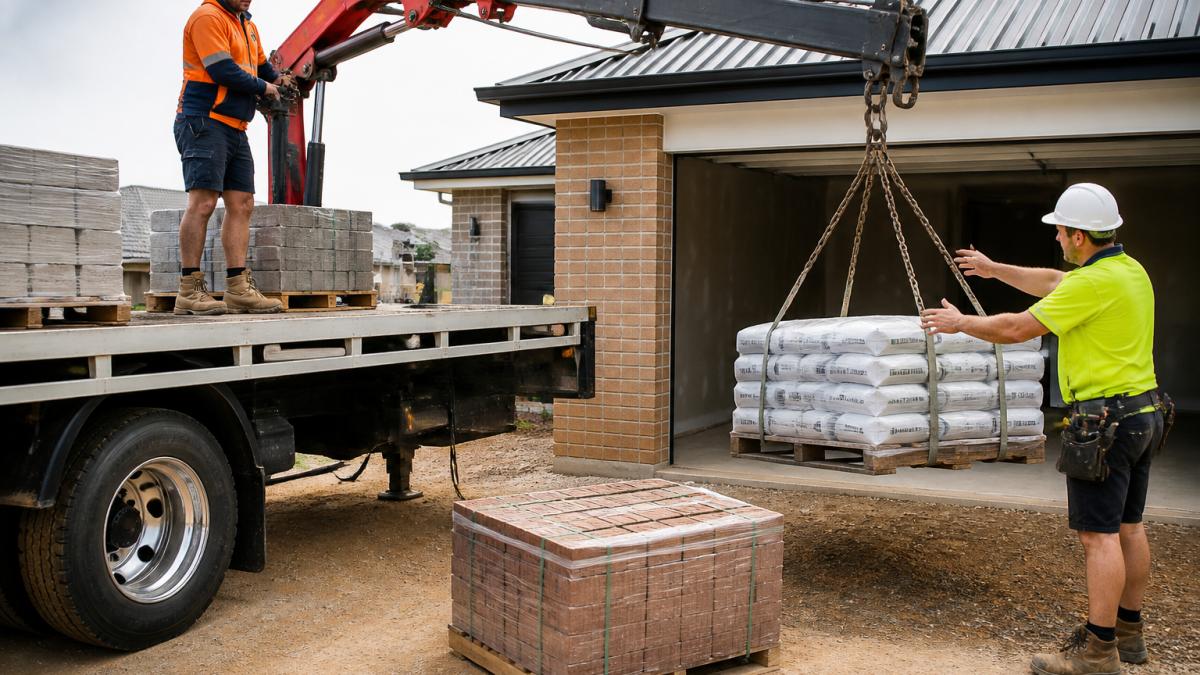
Plan for these before the truck arrives:
- Access: can a truck reach the drop point, and is there room to turn?
- Offload: who unloads, and is there equipment on site to do it?
- Storage: where do the materials sit, and are they protected from weather?
- Timing: does the delivery window match when someone is on site to receive it?
Nationwide delivery sounds simple until you're in a regional area. Confirm the actual delivery time and cost to your postcode. Trade Warehouse Direct offers free standard shipping over $150, with warehouses in VIC and WA.
Step-by-Step: Ordering Bulk Building Supplies
Knowing how to source bulk building supplies in Australia follows a clear sequence. Work through it in order and you avoid the gaps that cause delays and rework.
- Scope the job. List every material, fixing, and component the job needs. Group them by trade.
- Set quantities. Work from current drawings and add a sensible allowance for waste.
- Shortlist suppliers. Check stock depth, delivery coverage, and compliance documentation.
- Request quotes. Give each supplier the same list so quotes compare like for like.
- Compare delivered cost. Add freight and fees to the unit price before you decide.
- Confirm compliance. Get certification for safety-critical items before you order.
- Place the order. Confirm the dispatch date and delivery window in writing.
- Receive and check. Count the delivery against the order and log any shortfalls.
The step most buyers skip is number eight. A quick count on arrival catches shortfalls while you can still claim them.
Common Mistakes When Sourcing Bulk Building Supplies
The mistakes that cost the most are rarely about price. They're about planning, compliance, and assuming a supplier's stock position.
Three we see often:
- Chasing the lowest unit price. Freight and lead time usually erase the saving.
- Skipping the compliance check. A rejected product costs more than the price difference.
- Ordering without confirming stock. A confirmed order means little if the stock isn't there.
A fourth mistake is splitting an order across too many suppliers. You save a little per item but lose the freight consolidation and the single point of contact. For most small crews, fewer suppliers with deeper orders works better.
Trade Warehouse Direct covers fixings, electrical and hardware supplies, and bathroom fittings in one place. Our price match guarantee means you're not paying a premium for the convenience.
Frequently Asked Questions
How do I compare quotes for bulk building materials?
Ask each supplier for the same itemised list so you can compare like for like. Check the unit price, quantity breaks, GST, and delivery charge to your site. Confirm what is in stock and the lead time, since a low price means little if the materials arrive late. Look at the returns policy and whether the supplier offers a price match guarantee. A good quote should also state product brands, sizes, and compliance markings so you can verify quality.
How can I check whether a building product meets Australian requirements?
Look for evidence of compliance on the product or its packaging. For electrical items, check the RCM marking. For structural and safety-critical products, ask for a current certificate of conformity or a declaration from the supplier. Many products fall under the National Construction Code and relevant Australian Standards, so confirm the supplier can point to the standard the product is tested against. If a supplier cannot provide this paperwork, treat it as a red flag.
What delivery and storage costs should I include in a bulk materials order?
Add the delivery fee to your site, any surcharge for regional areas, and the cost of unloading equipment such as a forklift or crane if the truck cannot tip. Factor in storage: bulk orders need a secure, dry space, and some materials like timber and plasterboard need flat, protected stacking. Also allow for the cost of a second delivery if you underestimate quantities. Free standard shipping thresholds, such as orders over $150, can reduce the freight line.
Can I negotiate better prices when buying building materials in bulk?
Yes, especially on repeat orders. Ask for a quantity break at the volume you actually expect to buy, not just a one-off order. Consolidate your list so you are buying more lines from one supplier, which gives you more room to ask for a better rate. If you run a maintenance or installation business, ask whether an account or trade pricing is available. Get the agreed price in writing before you place the order.
Sourcing bulk building supplies well is a discipline, not a lucky find. The buyers who get it right compare delivered cost, check compliance, and plan delivery before they order. Trade Warehouse Direct makes that simpler with nationwide delivery, free standard shipping over $150, warehouses in VIC and WA, and a price match guarantee. Shop now and place your next bulk order with one reliable supplier.

