

Last Updated: November 3, 2026
Quick Summary
The best bathroom hardware for DIY projects starts with hooks, then rails, then toilet roll holders, as these are the easiest pieces for a confident beginner to install. Hooks take 10-15 minutes, rails 20-40 minutes and toilet roll holders 15-20 minutes, and the fixing you choose matters more than the accessory itself.
- Plasterboard needs toggle anchors, while brick and tile need plugs and a masonry bit.
- A towel rail loaded with wet towels can exceed 5 kg per bracket, so check the anchor's load rating.
- Set hooks at roughly 1.6-1.7 m for adults and lower for children.
- Leave at least 200 mm clearance around a toilet roll holder so the roll turns freely.
- Brass and 304-grade stainless steel resist corrosion better than plated zinc or mild steel.
Table of Contents
- The 7 Best Bathroom Hardware Pieces to Install Yourself
- 1. Towel Rails and Towel Bars
- 2. Robe Hooks and Towel Hooks
- 3. Toilet Roll Holders and Spare Roll Storage
- How to Choose Bathroom Hardware That Lasts
- DIY Bathroom Accessories That Finish the Room
- Bathroom Hardware Installation Tools You Actually Need
- Bathroom Renovation Ideas on a Budget
- Frequently Asked Questions
The 7 Best Bathroom Hardware Pieces to Install Yourself
Bathroom hardware is the category of fittings that makes a bathroom usable: towel rails, hooks, toilet roll holders, shelves, cabinet handles and mirrors. The question most DIY customers ask is simple: which pieces can a confident beginner actually install without calling in a plumber or a tiler? This guide ranks the best bathroom hardware for DIY projects by difficulty, tools and time, so you can plan a bathroom refresh around the skills you already have.
The short answer: start with hooks, then rails, then toilet roll holders. Everything else is optional polish.
Here's what most guides get wrong. They rank hardware by looks and skip the two things that decide whether a DIY install succeeds: what your wall is made of, and whether the fixing is rated for a wet area. Get those right and almost every accessory on this list is a half-hour job.
Quick comparison: difficulty, tools and time
| Item | Difficulty | Key tools | Time per fitting | Wall fixing needed |
|---|---|---|---|---|
| Robe hooks and towel hooks | Easy | Drill, screwdriver, pencil | 10-15 min | Plugs for masonry, toggle fixings for plasterboard |
| Towel rails and towel bars | Easy to moderate | Drill, level, screwdriver | 20-40 min | Anchors rated for the rail's loaded weight |
| Toilet roll holders | Easy | Drill, screwdriver | 15-20 min | Plugs or toggle fixings |
| Shelves and storage | Moderate | Drill, level, stud finder | 30-45 min | Fixings into studs or heavy-duty anchors |
| Cabinet and vanity hardware | Easy | Screwdriver, drill, template | 10 min per handle | None beyond the cabinet panel |
| Medicine cabinets and mirrors | Moderate to hard | Drill, level, two people | 45-90 min | Stud or masonry fixing, weight-rated |
| Finishes and coordination | Easy | None | Planning only | None |
1. Towel Rails and Towel Bars
Towel rails and towel bars are the best starting point for a bathroom hardware project because they are simple, visible and forgiving. A non-heated bar or ladder rail needs two or four fixing points, a level line and a drill. Nothing else.
A common mistake is fixing a rail with the screws that come in the box without checking the wall. Plasterboard needs toggle anchors; brick and tile need plugs and a masonry bit. In practice, this means the fixing, not the rail, decides how much weight the rail holds.
If you want a simple non-heated rail you can fit yourself, browse the single round bar towel rail kits and pick your width, finish and bar count.
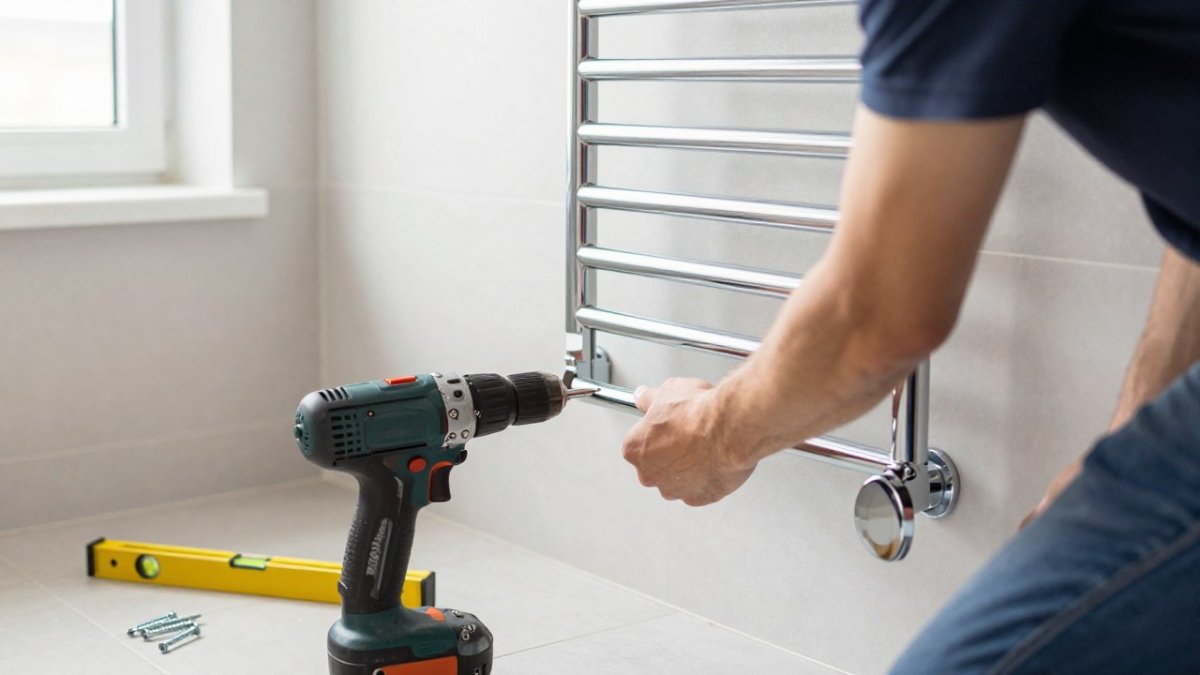
Best for: first-time installers and quick bathroom refreshes. Skip if: you want a heated rail, which needs electrical work by a licensed electrician.
2. Robe Hooks and Towel Hooks
Robe hooks and towel hooks are the easiest win in the whole bathroom. One or two screws, no levelling between multiple fixings, and they take the pressure off your towel rail. Most bathrooms need more hooks than they have.
Watch out: a hook in a tiled shower recess needs a fixing that seals the hole, or water gets behind the tile. Use a bead of silicone around the base plate.
If you're ready to add hooks, you can browse the round robe hook range in your choice of finishes.
Best for: renter-friendly refreshes and busy family bathrooms. Skip if: you need to hang heavy wet towels; use a rail instead.
3. Toilet Roll Holders and Spare Roll Storage
Toilet roll holders are a 15-minute job and one of the most satisfying bathroom hardware swaps. The only real decision is wall-mounted versus freestanding, and whether you want spare roll storage built in.
Measure the roll drop before you drill. A holder fixed too high leaves the roll rubbing the wall; too low and it clashes with the cistern. Hold the holder against the wall, mark through the plate, and check with a level.
You can shop the round toilet roll holder in a range of finishes to match the rest of the room.
Best for: quick upgrades and matching an existing finish. Skip if: your wall is fully tiled and you don't have a tile bit; use a freestanding stand instead.
How to Choose Bathroom Hardware That Lasts
Durability in a bathroom comes down to three things: the base material, the finish and the fixing. Most guides cover the first two and skip the third, which is the one that decides whether a rail is still on the wall in five years.
Base material. Brass and 304-grade stainless steel resist corrosion far better than plated zinc or mild steel in a steamy room.
Finish. Chrome, brushed nickel, matte black and powder-coated finishes all survive normal bathroom humidity, but they fail differently.
Fixings and wall surface. This is where most DIY installs fail. The fixing, not the accessory, carries the load, and the right fixing depends on what is behind the tile:
- Solid masonry or brick: a masonry plug and screw is sufficient for rails, hooks and shelves. Use a masonry bit and drill slightly deeper than the plug.
- Plasterboard with timber studs: fix directly into the stud where possible. A stud finder and a pilot hole confirm the stud line before you commit.
- Plasterboard without studs: use toggle anchors or a rated hollow-wall anchor. A common mistake is using the plugs supplied in the box, which are usually masonry plugs and will pull out of plasterboard under a wet towel.
- Tiled walls: you need a tile bit to get through the glaze without cracking the tile, then the appropriate plug or anchor behind it. Seal the hole with a bead of silicone around the base plate so water cannot track behind the tile.
Load ratings. A towel rail loaded with wet towels can easily exceed 5 kg per bracket, and a glass shelf loaded with bottles more again.
Cover plates. These are the detail most guides miss. If you are planning a neat, long-lasting install, add round towel rail cover plates in your chosen finish.
Cleaning and wear. Avoid abrasive cleaners on any plated or powder-coated finish; a soft cloth and a pH-neutral bathroom cleaner is enough.
DIY Bathroom Accessories That Finish the Room
The pieces that finish a bathroom are the small ones: a shelf, a mirror, a soap dish, a towel ring. They cost little and change how the room reads, but they are also where DIY installs most often go wrong, because the lighter the item looks, the more likely it is to be fixed with the wrong anchor.
Ranked by DIY difficulty
- Towel rings and soap dishes (easy, 10-15 min). One or two fixings, light load, no levelling between multiple points. The main risk is drilling tile without a tile bit; use a piece of masking tape over the mark to stop the bit wandering.
- Open shelves (moderate, 30-45 min). A shelf needs two brackets on a level line and fixings rated for the shelf plus its contents. Glass shelves need brackets rated for the loaded weight, not the empty shelf.
- Mirrors (moderate to hard, 45-90 min). A mirror is the heaviest item on this list and the one most likely to need two people. Fix into studs or masonry, never into plasterboard alone, and use a fixing rated well above the mirror's weight. Measure the mirror's centre against eye height for the tallest regular user before drilling.
- Freestanding pieces (easy, no fixing). A freestanding towel stand or toilet roll stand avoids drilling entirely and suits rented homes or fully tiled walls where you do not want to risk a tile.
Placement and ergonomics. Plan the layout on paper first and mark heights against the people who actually use the room.
Watch out: glass shelves and mirrors need fixings rated for the item plus whatever sits on or hangs from it. Don't guess the anchor rating from the size of the screw, check the pack, and if it is not stated, size up.
Styling without re-drilling. If you want to change the look without new holes, swap the finish of the accessories you already have rather than adding new fixing points. Keeping one finish family across hooks, rails and holders reads as deliberate; a single contrasting piece reads as a mistake unless it is repeated elsewhere in the room.
Bathroom Hardware Installation Tools You Actually Need
You need fewer tools than the internet suggests. A cordless drill with masonry and tile bits, a spirit level, a pencil, a screwdriver set and a tape measure cover almost every job on this list.
The one thing worth buying properly is the fixings. Correct brackets and fixings make the difference between a rail that stays up and one that pulls out.
For guidance on safe DIY work around water and electricity, check the Safe Work Australia guidance on DIY and home maintenance and the Standards Australia information on building standards.
Bathroom Renovation Ideas on a Budget
A budget bathroom renovation starts with hardware, not tiles. Swapping rails, hooks, holders and handles refreshes the room for a fraction of a full rebuild, and you keep the layout you already have.
Work in this order: hooks first, then rails, then holders, then handles. Each step is independent, so you can stop at any point and still have a finished-looking room.
For product selection and current pricing, Trade Warehouse Direct's bathroom fittings range is the place to start, and our team can help you match finishes across a full set.
Frequently Asked Questions
What bathroom hardware is easiest to install yourself?
Hooks, robe hooks and adhesive-backed accessories are the simplest, usually needing only a drill or screwdriver and ten to twenty minutes. Towel rails and toilet roll holders come next, needing wall plugs matched to your wall type. Anything involving taps or shower mixers is harder because it touches plumbing, so plan those for a licensed plumber. If you are new to DIY, start with hooks and shelves, then work up to rails once you are confident drilling into tiles.
What tools do you need to install bathroom hardware?
A cordless drill with masonry and tile bits, a spirit level, a pencil, a tape measure, a screwdriver set, wall plugs and a stud finder cover most jobs. For tile, add masking tape and a tile bit to stop the drill wandering. A small tub of silicone sealant helps around rails and holders in wet zones. Having the right bathroom hardware installation tools on hand before you start avoids repeated trips to the hardware shop mid-job.
How do you match bathroom hardware finishes?
Pick one finish family and repeat it across towel rails, hooks, toilet roll holders and cabinet handles. Chrome and brushed nickel suit most bathrooms and hide water marks better than polished finishes. Matt black works well with darker tiles but shows dust. If you want a layered look, keep the taps and shower in one finish and repeat it on at least two other pieces so the room reads as coordinated rather than mismatched.
Which bathroom fittings are best for a budget DIY renovation?
Focus on pieces that change the look without moving plumbing: towel rails, hooks, toilet roll holders, shelves and cabinet handles. These are budget-friendly updates that you can install in a weekend with basic tools. Replacing taps and shower heads is also affordable but needs a plumber or confident DIY skill. Spend more on items in wet zones, where corrosion resistance matters, and save on decorative accessories that are easy to swap later.
The hardest part of a DIY bathroom refresh isn't the drilling. It's choosing fittings that match, last and fit your wall. Trade Warehouse Direct supplies trade-quality bathroom hardware with a Price Match Guarantee, nationwide delivery, warehouses in VIC and WA, and free standard shipping over $150. Get started with Trade Warehouse Direct and build a bathroom that looks fitted by a professional.


